Stone, Steel, and Story: How to Read a City's Buildings Like You Actually Live There
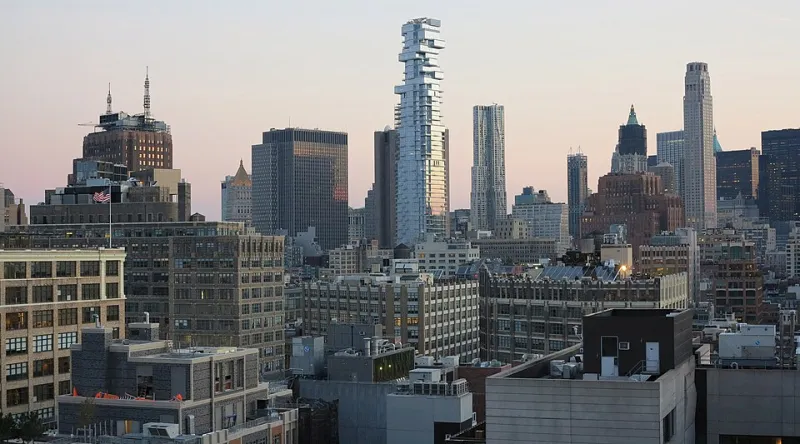
Photo: Wilfredor, CC BY-SA 4.0, via Wikimedia Commons
Most travelers look at a city skyline and see a pretty backdrop for photos. Locals see something else entirely — a timeline, a power struggle, a love letter, and sometimes a cautionary tale, all stacked on top of each other in glass and limestone. Learning to read that story isn't just for architecture nerds. It's one of the fastest ways to understand what makes any city genuinely tick.
Once you start noticing the built environment, you can't stop. And honestly? It makes every neighborhood walk about ten times more interesting.
Start With the Bones: What Era Built This Place?
The first question to ask when you walk into an unfamiliar neighborhood is simple: when was this built, and why? Cities in the American Northeast — think Boston, Philadelphia, Baltimore — carry centuries of layered construction. You'll see Federal-style rowhouses from the early 1800s sitting next to Gilded Age office towers sitting next to glass-box condos from 2019. That mix isn't accidental. It's the physical record of every economic boom, every fire, every urban renewal project, and every wave of immigration that ever reshaped the place.
Out West, the story reads differently. Cities like Phoenix, Las Vegas, and even Los Angeles were largely built for the car era, which is why you see wide arterials, low-slung commercial strips, and sprawling suburbs that stretch to the horizon. The architecture reflects the assumptions of a particular moment in American life — cheap land, cheap gas, and a love affair with the open road.
When you clock what era shaped a neighborhood, you've already got the first chapter of its story.
Ornament Is Never Just Decoration
Here's a thing most people miss: the details on older buildings were deliberate and expensive. That carved eagle above a bank entrance in Chicago? That's early 20th-century institutional architecture saying trust us, we're permanent, we're powerful. The terra cotta flourishes on a 1920s department store in Kansas City? That's a retailer trying to signal luxury and aspiration to middle-class shoppers who'd never been to Europe.
Modern buildings communicate through absence. Clean lines, minimal ornament, and exposed structural elements became the language of postwar American architecture — a visual argument that honesty and efficiency were the new sophistication. When you see a brutalist concrete civic building from the 1960s or 70s (and you'll see them in almost every major American city), that's a city government that bought into a particular idea about what public institutions should project: seriousness, permanence, democracy without frills.
Look at what's decorated and what's stripped bare, and you're reading a city's values at a specific moment in time.
The Gaps Tell the Story Too
One of the most underrated skills in reading a city is learning to notice what isn't there. Vacant lots in otherwise dense neighborhoods often mark where something was demolished — sometimes by urban renewal projects in the mid-20th century that tore through Black and working-class communities in cities from Detroit to San Francisco. Those absences are part of the story, even if they're invisible to a first-time visitor.
In cities like New Orleans or Savannah, you'll notice an unusual consistency in architectural scale — buildings roughly the same height, similar setbacks, similar materials. That's the result of historic preservation ordinances that protected neighborhoods from the wrecking ball. In cities where preservation lost the fight, you get the jarring contrasts of a 19th-century church sandwiched between a parking garage and a glass tower. Neither outcome is inherently better, but both tell you something real about how that city weighs history against development pressure.
Neighborhood Transitions Are Architecture's Fault Lines
Walk from one neighborhood into the next in almost any American city and you'll often feel the shift before you consciously register it. The sidewalks get wider or narrower. The building heights change. The storefronts go from national chains to independent shops or vice versa. Those transitions are usually the result of zoning decisions made decades ago — sometimes deliberately designed to separate communities by income or race.
In cities like Minneapolis, Seattle, and Austin, you can watch those fault lines actively shifting right now. New mixed-use buildings with ground-floor retail and apartments above are pushing into historically single-family neighborhoods, and the architectural contrast is stark. That tension between old-scale housing and new-density development is one of the defining visual narratives of American cities in the 2020s.
When you notice those contrasts, you're not just seeing architecture. You're watching a live argument about who a city is for.
How to Actually Do This on Your Next Trip
You don't need a degree in urban planning to start reading cities this way. A few practical moves:
Walk one block and look up. Most people navigate cities at eye level, focused on storefronts and signs. Tilt your head back. The upper floors of buildings — especially in older commercial districts — are where the architectural character lives. Cornices, window proportions, and material choices are usually more intact above the ground floor, which tends to get renovated constantly.
Find the oldest building on the block. Once you identify it, ask yourself why it survived when so much else didn't. Landmark status? Stubborn owner? Useful enough to keep? The answer usually points to something interesting about local history.
Look for the seam. In almost every American city, there's a visible line where the pre-WWII city ends and the postwar city begins. Finding that seam — and understanding what it means — gives you a fast master class in how that particular city grew.
Check the neighborhood name against the architecture. If a neighborhood is called something like "The Warehouse District" or "Foundry Row," the buildings are probably telling you what used to happen there. Former industrial spaces converted to lofts, galleries, and restaurants are a specific American story about deindustrialization and creative-class migration that has played out in Pittsburgh, Cincinnati, Richmond, and dozens of other cities.
The City Is Always Under Construction
Reading architecture isn't a static exercise because cities never stop writing their own story. The glass tower going up on the edge of downtown right now will be the historic building someone fights to preserve in 2080. The parking lot that feels like dead space today might be the neighborhood anchor of the next generation.
The travelers and locals who get the most out of a city are the ones who stop treating buildings as scenery and start treating them as text. Once you make that shift, every walk becomes a different kind of trip — less about checking boxes and more about actually understanding where you are. And that, honestly, is what separates a good city visit from a great one.