Platform to Plate: Why America's Great Train Stations Are Secret Dining Destinations
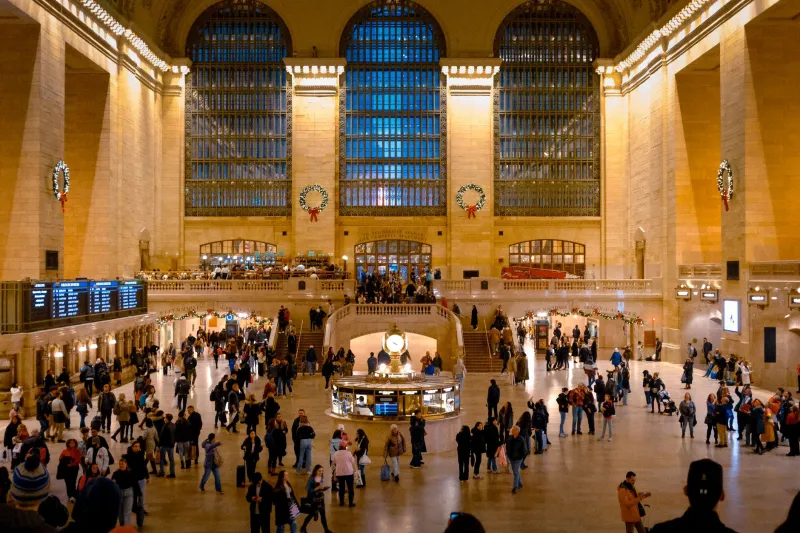
Most people treat a train station the way they treat a dentist's waiting room — a necessary pause before the real thing begins. Head down, coffee in hand, eyes on the departure board. But spend enough time actually looking around some of America's greatest transit hubs, and a different story starts to emerge. These aren't just places you pass through. They're places worth showing up for.
The food alone could justify the trip.
Grand Central Terminal: The Original Station Worth Staying For
If there's a ground zero for the transit-as-destination movement, it's Grand Central Terminal in Midtown Manhattan. The building itself is a jaw-dropper — that famous main concourse with the turquoise celestial ceiling has stopped more than a few rushing commuters dead in their tracks — but the dining options hiding beneath it are genuinely underrated.
The Grand Central Oyster Bar has been slinging shellfish since 1913. Let that sink in. More than a century of clam chowder, lobster pan roasts, and fresh-shucked oysters served inside a cavernous, vaulted dining room that feels equal parts historic landmark and neighborhood institution. Tourists walk past it every day without realizing it exists. Locals who know it treat it like a well-guarded secret. It's one of the most atmospheric restaurants in New York City, full stop — and it happens to be inside a train station.
Beyond the Oyster Bar, the Dining Concourse downstairs is a legitimate food destination in its own right. Think proper sit-down restaurants, a market hall feel, and options that go well beyond the sad airport-style grab-and-go you might expect. Shake Shack opened a location here. So did Parm, the beloved Italian-American spot. The quality of what's on offer consistently punches above what the transit-hub setting might suggest.
Union Station, DC: A Food Hall Worth Missing Your Train For
Washington's Union Station has had a complicated history with food. For years, it was a cautionary tale — a gorgeous Beaux-Arts building filled with forgettable chain restaurants and mediocre fast food. That story has changed significantly.
The recent reimagining of Union Station's dining scene has pushed it into genuinely compelling territory. The lower-level food hall now hosts a rotating cast of local vendors alongside more established names, and the quality has improved dramatically. More importantly, the building itself remains one of the most beautiful public spaces in the country. Eating a good meal inside it feels like a bonus you didn't quite expect.
For travelers doing the Amtrak corridor — Boston, New York, Philly, DC — Union Station is the ideal bookend. Arrive early. Grab something from the food hall. Sit in the main hall under those 96-foot barrel-vaulted ceilings and remind yourself that most airports would kill for a fraction of this architecture.
Chicago Union Station: Deep Dish Is Just the Beginning
Chicago's Union Station is the kind of place that makes you realize how much transit infrastructure used to be built with human dignity in mind. The Great Hall — all marble columns and coffered ceilings — is a masterpiece that most Chicagoans have probably never lingered in long enough to appreciate.
The food scene here is still catching up to the building's ambitions, but the surrounding neighborhood more than compensates. The West Loop, right on Union Station's doorstep, has quietly become one of the most exciting dining neighborhoods in the entire country. Restaurant Row on Randolph Street is a short walk away. If you're rolling into Chicago on an Amtrak train, you're arriving at the edge of one of the best eating neighborhoods in America. That's not an accident worth ignoring.
The Underground Gems: NYC's Subway Concourses
Grand Central gets the headlines, but New York's subway system has its own scattered constellation of food worth tracking down. The Essex Market, relocated to its current home near the Delancey Street station, carries the spirit of the old Lower East Side market tradition into a modern, vendor-driven space. It's not technically inside the subway, but the connection between transit and neighborhood food culture here is impossible to miss.
Down in the Atlantic Terminal area of Brooklyn, the convergence of multiple subway lines and the Long Island Rail Road has spawned a dense cluster of food options in the surrounding blocks that rewards exploration. Transit hubs pull foot traffic, and foot traffic pulls good food. It's a cycle that's quietly shaped some of the most interesting eating neighborhoods in American cities.
Why This Matters for Travelers
Here's the practical upside for anyone planning a city trip: transit hubs are almost always centrally located, publicly accessible, and free to walk into. You don't need a ticket to eat at the Grand Central Oyster Bar. You don't need to be catching an Amtrak to grab lunch inside Union Station.
For travelers who want to experience a city like a local — or at least like a local who's paying attention — these spaces offer something genuinely valuable. They're where the city's history, architecture, and daily rhythms intersect in a single, accessible location. And increasingly, the food inside them is good enough to justify the visit on its own terms.
The best transit hubs have always been more than functional infrastructure. They were built to impress, to signal civic pride, to make travelers feel like arriving somewhere mattered. The food culture that's grown up inside them is just the latest expression of that same impulse.
How to Do It Right
A few practical notes if you want to actually eat your way through America's transit hubs without wasting a meal:
Go at off-peak hours. Grand Central's Oyster Bar during the lunch rush is a different experience than the same room at 3pm on a Tuesday. Off-peak hours mean better service, more breathing room, and a chance to actually absorb the space.
Look down. The most interesting food in transit hubs is almost always underground. Concourse levels and lower floors tend to hide the better vendors, the historic spots, and the places that haven't been optimized purely for tourist foot traffic.
Don't just eat at the station. Use the transit hub as a launching pad. Union Station in DC, Union Station in Chicago, Grand Central in New York — all of them sit at the edge of neighborhoods worth exploring on foot. The station is the start, not the whole story.
America's great train stations were designed to make you feel something. It turns out, so was the food inside them. Next time you're passing through, slow down long enough to find out what that is.