Ride Like a Local: Unlocking Hidden City Gems One Transit Stop at a Time
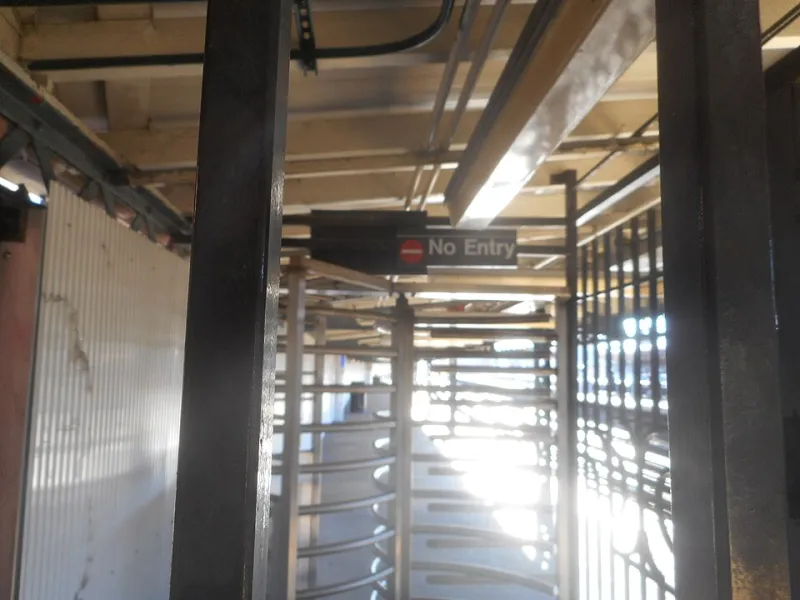
Photo: DanTD, CC BY-SA 4.0, via Wikimedia Commons
Most commuters treat public transit like a sensory deprivation chamber — headphones in, eyes down, counting stops until escape. Which is honestly a shame, because the subway line you've ridden four hundred times might be running straight through some of the most interesting urban pockets in your city.
The thing is, transit routes weren't drawn randomly. They follow the bones of a city — old neighborhoods, former industrial corridors, cultural enclaves that predate the downtown skyline. Every stop is a doorway. Most people never open it.
Here's how to start.
Treat One Stop Like a Destination
The easiest way to rewire your commute brain is to pick one unfamiliar stop per week and actually get off. Not to run an errand. Not because your app told you to. Just to look around for ten minutes before catching the next train.
Long-time Chicago El riders swear by this approach along the Pink and Green lines, where stops like Cermak-McCormick Place or Pulaski drop you into neighborhoods that don't show up on most tourist maps but are absolutely thriving with local bakeries, murals, and corner stores that have been feeding the same families for decades. You won't find these places on a listicle. You find them by showing up.
In New York, subway veterans often point to the outer borough stops — think Norwood-205th Street on the D train in the Bronx, or the Ditmas Avenue stop on the F in Brooklyn — as portals into a completely different city than the one tourists experience. The architecture changes. The food changes. The pace changes. And all it costs is a MetroCard swipe.
Follow the Street Art, Not the Map
Transit infrastructure has quietly become one of the best canvases for urban art in America. Los Angeles Metro riders have been watching the system's public art program evolve for years — stations like North Hollywood and Wilshire/Vermont double as genuine galleries, with commissioned works from serious artists embedded right into the tile and concrete.
But the more interesting stuff often lives just outside the stations. The blocks immediately surrounding transit stops in cities like Philadelphia, Atlanta, and Washington D.C. tend to attract muralists and street artists precisely because the foot traffic is consistent. Walk a two-block radius around any elevated or subway stop in a transitional neighborhood and you'll almost always find something worth photographing.
Make a habit of looking up when you exit. The side of a building you've walked past fifty times might be hiding something that wasn't there last month.
The Vendor Economy Is a City Guide in Itself
Street vendors and pop-up sellers cluster around transit stops for obvious reasons — that's where the people are. But they also tend to reflect the specific character of the neighborhood in ways that chain restaurants and generic storefronts simply don't.
The elote cart outside a particular Chicago Blue Line stop. The tamale vendor who parks near the BART entrance in Oakland's Fruitvale neighborhood every weekday morning. The guy selling fresh-cut fruit near the 7 train platforms in Jackson Heights, Queens — a neighborhood that's been called the most ethnically diverse urban area on the planet.
These micro-economies are living, rotating guides to what a neighborhood actually eats, celebrates, and cares about. Paying attention to them — and occasionally buying something — is one of the most direct ways to connect with the city beyond the tourist-approved version.
Build a Transit-Based Neighborhood Radar
Experienced urban explorers develop a kind of informal pattern recognition over time. Certain visual cues tend to signal that a neighborhood is worth a deeper look: independent coffee shops appearing near a previously bare station exit, new murals going up on formerly blank walls, weekend farmers markets setting up in adjacent parking lots.
If you ride the same line regularly, you're actually in a better position than most travel writers to notice these shifts as they happen. The commuter who takes the same bus through a neighborhood for two years has a more nuanced read on that place than someone who visited once for a food tour.
Keep a loose mental (or actual) list of stops that seem to be changing. Then go back on a Saturday morning when you're not on a schedule. The difference between a weekday commute and a weekend wander through the same stop can be dramatic — street markets, community events, and local foot traffic paint a completely different picture.
Make Dead Time Work Harder
The average American commuter spends about 27 minutes each way getting to work. That's nearly an hour a day, five days a week, of time that usually gets surrendered to podcasts and doomscrolling.
None of this means you have to turn every commute into an anthropology project. But even a small shift in attention pays dividends. Look out the window when the train runs above ground. Notice what's being built, torn down, or painted over. Track the way a neighborhood's demographics shift between stops — it tells you something real about how the city is organized, who has resources, and where new energy is flowing.
Some transit riders keep running notes on their phones — not formal journals, just quick observations. "New coffee spot at X stop." "Huge mural appeared on the corner of Y and Z." "Interesting record store visible from the platform." Over time, these fragments build into a genuinely useful personal city guide that no app can replicate.
The Commute as a City Education
Here's the honest truth: most of us know our cities far less than we think we do. We know our neighborhoods, our routines, the handful of restaurants we rotate through. The rest of the city — the parts that make it genuinely interesting — stays abstract.
Public transit is one of the few remaining systems that physically moves you through all of it. Rich blocks and struggling ones. Historic districts and brand-new developments. The city as it was and the city as it's becoming.
You're already paying for the ride. You might as well use it.