Concrete Dreams: What Parking Garages, Overpasses, and Stairwells Reveal About the Cities We Think We Know
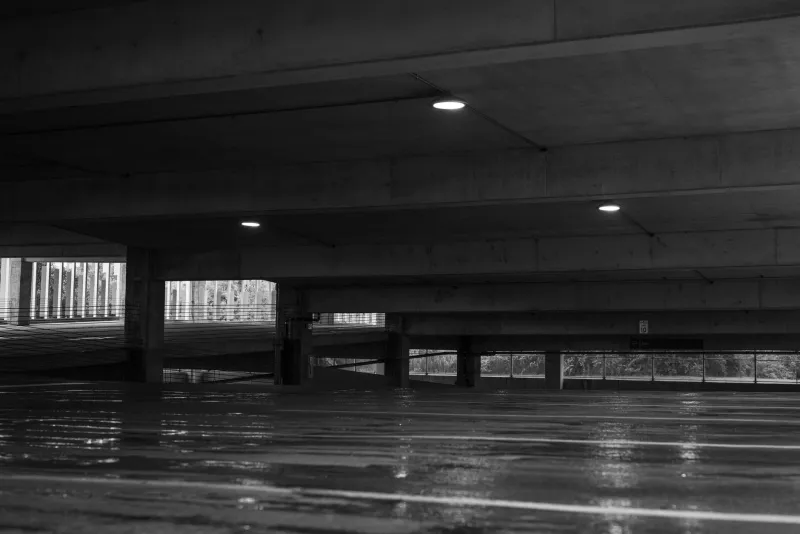
There's a parking garage in downtown Cincinnati that looks like a stack of concrete ribbons frozen mid-wave. It doesn't show up in any travel guide. Nobody's posting it to their feed. But locals who've lived near it for decades will tell you it's one of the most quietly beautiful structures in the city. That's the thing about utilitarian architecture—it's doing all the emotional heavy lifting while the famous stuff takes all the credit.
If you've ever walked through a city and felt something you couldn't quite name—some vague sense of whether a place was generous or stingy, confident or anxious—you were probably picking up signals from exactly these kinds of spaces. The infrastructure nobody talks about is, in many ways, the infrastructure that matters most.
Why "Invisible" Architecture Is Actually the Loudest Thing in the Room
Monuments are designed to impress. Museums are curated to inspire. But parking garages, highway overpasses, pedestrian bridges, and service stairwells? Those were built to function, which means the decisions behind them were made without the performance anxiety that shapes landmark design. What you see is what the city actually valued—or didn't.
Take overpasses. In cities that built aggressively for cars in the mid-20th century—Detroit, Los Angeles, Houston—the overpass isn't just an engineering solution. It's a statement of priorities, sometimes a scar. Many American overpasses sliced directly through Black and working-class neighborhoods, a pattern so consistent that urban planners now have a name for it: infrastructure racism. When you stand underneath an overpass and look at what's on either side of it, you're reading a chapter of urban history that no museum exhibit is going to hand you.
Conversely, cities that invested in making their utilitarian infrastructure livable tell a completely different story. Portland's pedestrian bridges aren't afterthoughts—they're destinations. Pittsburgh's stairways connecting hillside neighborhoods to downtown are so beloved that the city publishes a map of them. These choices reflect a city's relationship with its own residents, not just its tourists.
The Parking Garage as Accidental Art
Few structures get less respect than the American parking garage, and few structures deserve a second look more urgently. Built in earnest from the 1950s through the 1980s, many of them represent the peak of brutalist and late-modernist architectural ambition applied to the most mundane possible program.
In Boston, the Government Center Garage—since demolished, which is its own conversation—was a hulking, aggressively textured concrete beast that people hated and then, when it came down, quietly mourned. In Los Angeles, the Ace Hotel's parking structure in Downtown was so visually striking that it became part of the hotel's appeal. In Nashville, older multi-story garages near Broadway sit next to gleaming new development, looking almost confrontational in their refusal to apologize for existing.
What makes parking garages worth your attention isn't just aesthetics, though. It's the way they encode a city's relationship with density and movement. A city with beautiful, well-maintained garages that integrate into street life—ground-floor retail, good lighting, active edges—is a city that thought about how people actually move through space. A city with blank, hostile concrete walls facing the sidewalk at street level made a different choice. Neither judgment is subtle, once you're looking for it.
Stairwells and the Democracy of the City
Emergency stairwells are, by definition, not meant to be used by most people most of the time. Which is exactly what makes them so revealing. The condition of a building's stairwell—its lighting, its cleanliness, the quality of its materials—tells you almost everything about who the building's designers thought really mattered.
In high-end office towers and luxury residential buildings, even the stairwells tend to be finished. There's carpet or polished concrete, proper lighting, maybe even a window or two. In buildings that were built to minimum code for maximum density, stairwells are afterthoughts—bare cinder block, flickering fluorescents, the faint smell of something you'd rather not identify. These aren't just aesthetic differences. They're moral ones.
Public stairways in cities—the outdoor kind that connect different elevations—are a different category entirely, and some cities have turned them into genuine attractions. San Francisco's Filbert Steps, Kansas City's bluff stairways, and Pittsburgh's famous "739 steps" connecting neighborhoods aren't just practical connectors. They're places where city life happens: dog walkers, commuters, kids, tourists who got lost and found something better than what they were looking for.
How to Actually Do This on Your Next Trip
You don't need to become an architecture obsessive to start reading cities this way. You just need to deliberately look at the stuff you'd normally walk past.
Start with the edges. The space under an overpass, the side wall of a parking structure, the gap between two buildings—these transitional zones tell you whether a city thinks about the experience of being in between places, or only about the places themselves.
Look for the old infrastructure next to the new. Cities in the middle of rapid development are especially readable this way. When a glass-and-steel condo tower goes up next to a 1960s concrete parking deck, you can see two different eras of urban thinking side by side. Which one feels more human? The answer is rarely obvious.
Find the pedestrian infrastructure. Crosswalks, bridges, underpasses, skyways—the way a city handles pedestrian movement reveals its priorities more clearly than almost anything else. Minneapolis's famous Skyway System, which connects 80 blocks of downtown buildings through enclosed elevated walkways, is either a marvel of cold-weather urbanism or evidence that the city gave up on street-level life, depending on who you ask. That tension is the whole story.
Pay attention to maintenance. A crumbling pedestrian bridge in an otherwise prosperous neighborhood isn't an accident. It's a decision. So is a beautifully kept stairway in a low-income area. These details are dispatches from city hall, public works departments, and decades of budget negotiations.
The Best Cities to Practice This Kind of Looking
Almost any American city rewards this kind of attention, but a few are particularly rich territory. Chicago's elevated rail infrastructure—the Loop—is so integrated into the city's character that it's become iconic, but the spaces under the L tracks, the gritty urban corridors they create, are a whole other education. Pittsburgh's topography has forced generations of creative infrastructure solutions, from inclines to staircases to bridges (the city has more bridges than any other in the world). Detroit's relationship with car infrastructure is practically a graduate seminar in 20th-century American urban planning, for better and worse.
The point isn't to skip the landmarks. It's to fill in the space between them with the architecture that actually holds a city together. Once you start, you'll find that the parking garage around the corner from your hotel has more to say about where you are than the museum you stood in line for an hour to enter.
Concrete doesn't lie. It just waits for someone to ask it the right questions.