Delivered to Your Door, Discovered by the World: How Food Apps Are Accidentally Making Local Restaurants Famous
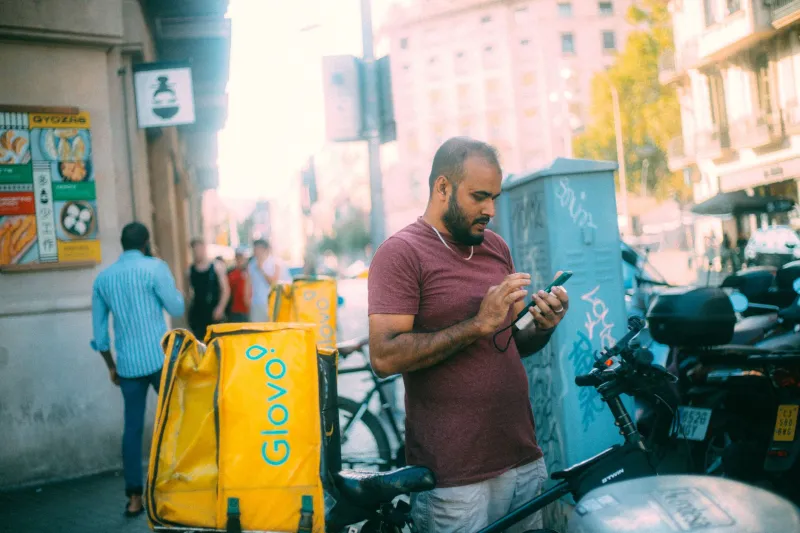
Somewhere between the sponsored banner ads and the ghost kitchen listings, something genuinely cool is happening on your food delivery app. A little Salvadoran spot with 94% ratings and 600 reviews is sitting three spots below the Applebee's. A Bangladeshi home cook who started selling biriyani out of her apartment kitchen during the pandemic now has a waitlist on weekends. A Nigerian-run suya joint in a strip mall you'd never slow down for on a road trip is quietly racking up five-star reviews from people three zip codes over.
None of them have Instagram strategies. None of them hired a publicist. They just cook really well — and the algorithm, for once, noticed.
The Accidental Discovery Engine
Food delivery platforms were designed to solve a logistics problem: get restaurant food to people who don't want to leave their homes. But in solving that problem, they built something that traditional travel and dining guides have struggled to replicate for decades — a real-time, crowd-sourced map of what a city's residents are actually eating and loving right now.
Traditional food media has always had a gatekeeping problem. A Michelin star or a James Beard nomination requires a certain kind of visibility that heavily favors restaurants in specific neighborhoods, price brackets, and culinary traditions. A Yelp review can be gamed. A glossy magazine feature usually follows a publicist's pitch. But a 4.9-star rating with 1,200 reviews on DoorDash or Uber Eats? That's a lot of actual humans making actual decisions with their actual money — and coming back for more.
For travelers, that signal is gold.
How to Actually Use These Platforms Like a Local
Here's the thing most visitors don't realize: if you open a delivery app in a city you're visiting and sort by rating rather than sponsored results, you're essentially holding a live vote on the best food in that neighborhood. Not the most marketed food. Not the most Instagrammable food. The food people order on a Tuesday night when they're tired and hungry and they just want something that's going to be right.
That's a very different list than what you'll find in most travel guides.
A few moves worth making before your next trip:
Set the delivery address to a residential neighborhood, not your hotel. Hotels tend to cluster in commercial zones where chain restaurants dominate. Drop a pin in a residential pocket of the city and see what's actually feeding the people who live there.
Filter by cuisine type, not popularity. Popularity rankings often reflect marketing spend. Cuisine filters will surface specialists — the people who do one thing obsessively well — rather than the restaurants with the biggest promotional budgets.
Read the reviews for context, not just the star count. Delivery reviews are remarkably candid. People mention parking, portion sizes, whether the owner was friendly when they picked up in person. It's neighborhood texture hiding in plain sight.
Look for high review counts at mid-range prices. A restaurant with 2,000 reviews at an average order total of $14 has earned a loyal, repeat customer base. That's not an accident. That's a genuinely good restaurant that people keep coming back to.
What the Algorithm Is Actually Rewarding
Delivery platforms rank restaurants based on a combination of order volume, review scores, delivery speed, and repeat customer rates. None of those metrics care about a restaurant's marketing budget or its relationship with local food media. They care about whether the food was good enough to make someone order again.
This creates a surprisingly meritocratic environment for small operators. A Vietnamese family running a pho shop out of a former diner doesn't need to compete with a Shake Shack on brand recognition — they just need to make really good pho, package it well, and deliver it on time. If they do that consistently, the platform surfaces them.
And increasingly, that surfacing is crossing over into real-world discovery. Restaurants that built their reputations on delivery platforms are now seeing walk-in traffic from people who found them online and wanted to experience the place in person. The delivery app became a dining guide. The dining guide became a neighborhood map. The neighborhood map is quietly reshaping how travelers find the best food in any city they visit.
Cities Where This Is Playing Out Most Dramatically
This phenomenon is happening everywhere, but a few cities have become particularly fertile ground for delivery-driven discovery.
Houston has long been one of America's most underrated food cities, and its sprawling, car-dependent geography means a huge number of incredible restaurants exist in strip malls and suburban corridors that most visitors never reach. Delivery apps have become a genuine equalizer, surfacing Nigerian, Vietnamese, Honduran, and Pakistani restaurants that would otherwise require a local connection to find.
Atlanta's rapidly shifting neighborhoods have created a food scene that moves faster than traditional media can track. Delivery platforms are capturing that movement in real time, and savvy visitors are using them to find the city's emerging culinary voices before the food press catches up.
Chicago's South and West Side restaurants have historically been underrepresented in the city's mainstream food coverage. Delivery platforms, which don't editorialize about which neighborhoods are worth covering, have helped surface some of the city's most exciting cooking to a wider audience.
The Limits of the Algorithm
None of this is perfect, and it's worth being honest about the gaps. Delivery platforms still favor restaurants with the infrastructure to handle delivery volume, which tends to exclude the very smallest operations — the one-person tamale stand, the backyard barbecue pitmaster who sells out by noon on Saturdays. The platforms also take significant commission cuts, which means the restaurants most dependent on delivery revenue are often the ones with the thinnest margins, a structural tension that doesn't get talked about enough.
And of course, the experience of eating at a great restaurant — the room, the service, the way a dish lands in front of you — doesn't translate through a cardboard container. Discovery through delivery is a starting point, not an endpoint.
But as a tool for finding where a city's residents are actually eating? For identifying the neighborhoods where something real is happening in the kitchen? For cutting through the noise of sponsored content and influencer partnerships to find the places that earn their reputation one order at a time?
The app on your phone is doing something the travel industry has been trying to crack for years. You might as well use it.
The Takeaway for Travelers
Next time you're planning a trip, add this to your pre-arrival research: open whatever delivery app has the best coverage in your destination city, drop a pin in a neighborhood you want to explore, and spend fifteen minutes scrolling through the results sorted by rating. Make a short list. Cross-reference it with Google Maps to see which ones have a physical space worth visiting in person.
You'll find things that no guidebook has gotten to yet. You'll eat better. And you'll come home with the kind of restaurant recommendations that make people ask, genuinely, how you always know where to find the good stuff.
The secret is the algorithm. But don't tell everyone.