First Mover Advantage: How to Read a Neighborhood Before It Becomes Everyone's Favorite Neighborhood
The Best Time to Visit a Neighborhood Isn't When Everyone Else Does
Here's something no travel algorithm will tell you: by the time a neighborhood lands on a major "best of" list, its most authentic version is already fading. The dive bar that made it cool just signed a lease with a craft cocktail company. The affordable art studios are converting into short-term rentals. The whole thing is still fun — but you missed the real thing.
The good news? You don't have to. Neighborhoods don't just suddenly explode. They telegraph their transformation for months, sometimes years, before the brunch crowds arrive. If you know what to look for, you can get in early — when prices are low, locals are still dominant, and the energy is genuinely electric rather than performed.
This is your field guide to reading those signals.
Watch the Storefronts, Not the Restaurants
Food media loves to crown neighborhoods by their restaurant openings, but by that point, the transformation is already priced in. The smarter move is to watch what's happening before the restaurants.
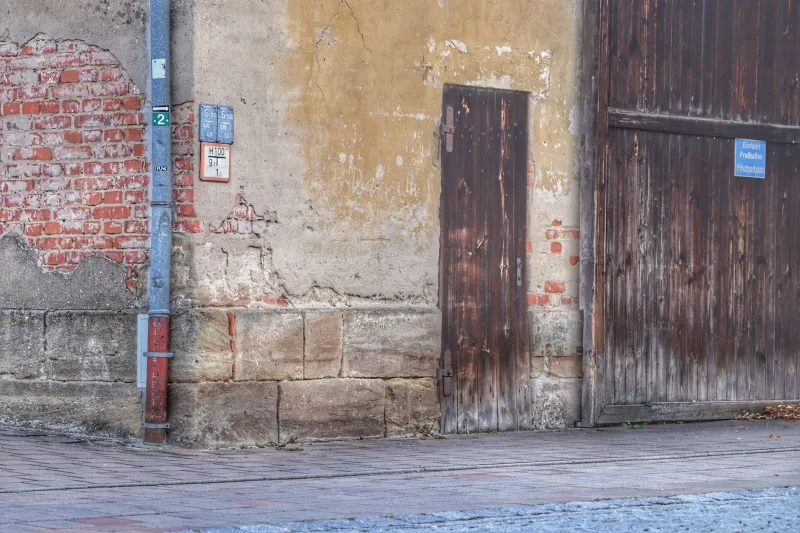
Specifically, look at storefronts that aren't restaurants yet. When you start seeing a cluster of independent print shops, ceramics studios, small-batch candle makers, or vintage resellers opening in a commercial strip, that's a leading indicator. These businesses require low overhead and attract a creative class that tends to precede hospitality investment by 18 to 36 months.
Also pay attention to what's leaving. When a neighborhood starts losing its check-cashing spots, dollar stores, and discount furniture warehouses — not because they failed, but because the landlord saw an opportunity — that's a different kind of signal. The gap between what was there and what hasn't arrived yet? That's the window you want.
The Coffee Shop Theorem
It's almost a cliché at this point, but it keeps being true: a single independent coffee shop opening in a previously overlooked block is one of the most reliable early-warning signs in urban geography.
But not just any coffee shop. The specific profile matters. You're looking for the kind of place with exposed brick, a rotating art wall, a pour-over menu, and maybe a secondary function — a small vinyl section, a zine rack, a community bulletin board. These businesses don't open randomly. Their owners do real estate homework. They're betting on a neighborhood before the data catches up.
When two or three of these open within a six-block radius? You're not early anymore, but you're still ahead of the wave.
Follow the Murals
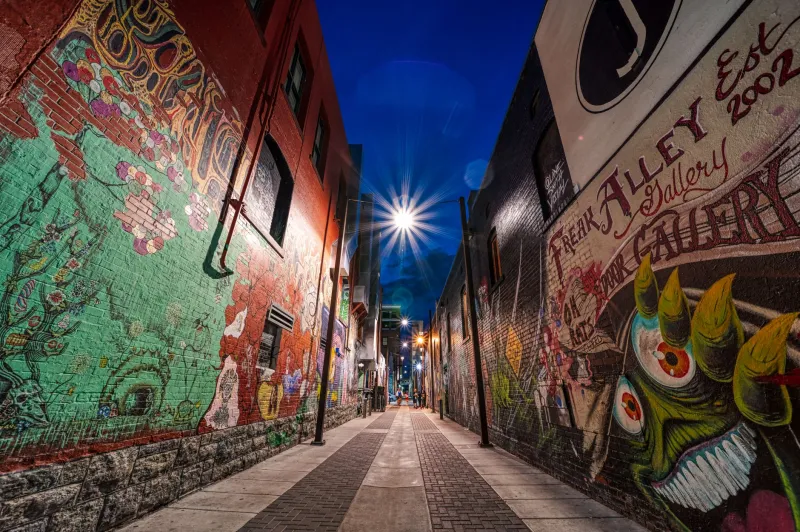
Street art is a surprisingly reliable socioeconomic indicator. Not the sanctioned, Instagram-optimized kind that cities commission to signal revitalization — that's a lagging indicator. You want the organic stuff: murals that appear on the sides of auto shops, utility boxes covered in wheat-paste, hand-lettered signs in storefront windows.
This kind of visual activity reflects an active creative community that has chosen a neighborhood, not been installed in it. Cities like Detroit, Richmond, Kansas City, and Tucson have all had corridors that lit up with organic street art before anyone in a marketing department noticed. When you see that density of unsanctioned creative energy, pay attention.
Bonus tip: if the murals are starting to get removed and replaced with cleaner, branded versions, the gentrification curve has already crested.
Social Media as a Seismograph
You don't need a data science degree to use social platforms as a neighborhood early-warning system. Here's a simple method: search a neighborhood name or its cross streets on Instagram and TikTok, then sort by recent, not top posts. What you're looking for isn't polish — you're looking for volume and variety.
If you see a sudden uptick in posts from people who don't appear to be locals (travel content creators, food bloggers from other cities, lifestyle accounts), that's a sign the neighborhood has just crossed a visibility threshold. You're still ahead of the mainstream, but the clock is ticking.
Conversely, if you search a neighborhood and almost nothing comes up — or what does come up is years old — that's potentially your best opportunity. You're looking at a place that hasn't been discovered yet, and your job is to figure out why it's about to be.
Demographics in Motion
This one requires some nuance, because neighborhood change and displacement are real issues that deserve honest acknowledgment. But if you're trying to understand where urban energy is shifting, demographic patterns are part of the picture.
Census data, even when it's a few years old, can show you where younger age cohorts are concentrating. Tools like the Urban Institute's neighborhood change trackers or even just browsing recent rental listings on Craigslist can tell you a lot. When a neighborhood's median renter age drops significantly over a short period, that typically precedes a broader cultural shift in what businesses and venues open there.
Look also for the presence of graduate students, recent transplants, and working artists. These groups tend to colonize affordable neighborhoods before the money follows — partly because they are the cultural infrastructure that makes a neighborhood interesting in the first place.
The Anchor Institution Effect
Some of the most reliable neighborhood transformation signals aren't commercial at all — they're institutional. When a small independent theater opens in an underutilized space, or a nonprofit arts center sets up in a former warehouse, or a community-supported farmers market launches on a previously empty lot, something important is happening.
These anchor institutions do something that individual businesses can't: they create a reason for diverse groups of people to gather repeatedly. That recurring foot traffic is what gives a neighborhood its identity, and it's also what attracts the businesses that follow.
In cities like Pittsburgh, New Orleans, and Minneapolis, you can trace the arc of entire neighborhood transformations back to a single anchor institution that opened years before anyone was paying attention.
How to Use This as a Traveler
Okay, so you're visiting a city for a weekend and you want to find the neighborhood that's actually interesting right now, not the one that was interesting three years ago. Here's a practical approach:
First, skip the listicles. They're always behind. Instead, look for local city blogs, alt-weekly papers, and neighborhood Facebook groups (yes, still). These sources are closer to the ground and less incentivized to oversell.
Second, ask service workers — baristas, bartenders, rideshare drivers. Ask them where they live, where they eat when they're off the clock, what neighborhood they think is interesting right now. These are people who interact with the city at street level every day. Their instincts are usually sharper than any algorithm.
Third, take a transit line you've never taken to a stop that isn't on your itinerary. Walk six blocks in any direction. Look at the storefronts. Look at the murals. Look at who's sitting on the stoops and what they're doing. You'll know within twenty minutes whether something's happening there.
The Real Reward
Here's the honest pitch for why this matters: visiting a neighborhood at its authentic peak — before the tour buses, before the velvet ropes, before the Yelp reviews hit four figures — is just a better experience. The locals are still there. The prices still make sense. The energy is real rather than replicated.
You might not get the perfectly curated photo op. But you'll get something better: a story nobody else has told yet. And on a travel website full of ranked lists and polished recommendations, that's actually the rarest thing we can offer you.