Your Nose Knows: Reading Neighborhood Change Before the Price Tags Catch Up
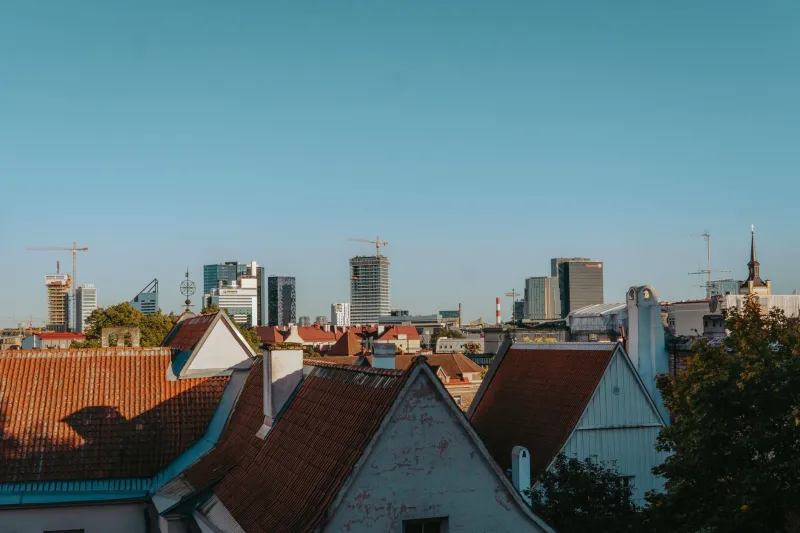
You're walking through a block in a city you've never visited before. The Zillow tab is open on your phone. The hotel options look reasonable. But something in the air — literally — is telling you that won't last long.
It smells like fresh paint, beeswax, and maybe a faint trace of pour-over coffee drifting from a storefront that used to be a transmission shop. If you've spent any time wandering American cities, you've caught that scent before. And if you've gone back to that same block two years later, you already know what it meant.
Gentrification has a smell. And according to urban planners, sensory anthropologists, and longtime city residents, learning to read it might be one of the most underrated tools a traveler — or a prospective resident — can develop.
What Spreadsheets Miss, Your Sinuses Catch
Economic data on neighborhood change is notoriously lagged. By the time median rent figures reflect a shift, the shift has already happened. Census data moves in decade-long snapshots. Even real estate listing trends can trail actual street-level conditions by months or years.
Sensory experience moves faster. "Smell is processed before conscious thought kicks in," says one urban anthropologist who studies how cities communicate change through non-visual cues. "You're registering transformation before your analytical brain has a chance to frame it."
The scent profile of a neighborhood is essentially a live index of its economic activity. Industrial blocks smell like machine oil, rubber, and exhaust — the olfactory signature of working-class manufacturing that's been embedded in the built environment for decades. When those smells start thinning out and getting replaced by cedar, soy wax, or the particular sharpness of a brand-new HVAC system, something structural is shifting underneath.
Travelers who pay attention to this aren't just getting a more immersive experience. They're reading the market in real time.
The Scent Stages of a Shifting Neighborhood
Urban researchers who study displacement patterns have started mapping what might be called olfactory phases — predictable scent transitions that track closely with demographic and economic change.
Phase One: The Grit Baseline. This is a neighborhood before significant outside investment. Think motor oil, corner-store fryer grease, laundromat steam venting onto the sidewalk, and the particular dusty-concrete smell of buildings that haven't been renovated in thirty years. This isn't a bad smell — it's the smell of a place that works, that has function, that houses real daily life.
Phase Two: The Transition Whiff. This is where it gets interesting. You start catching contradictions. A block still smells like it always has, but there's a new note — fresh lumber from a gut renovation two doors down, or the unmistakable scent of a commercial espresso machine warming up in what used to be a bodega. One longtime resident of a rapidly changing East Nashville neighborhood described it perfectly: "It started smelling like sawdust and fancy soap at the same time. That was the tell."
Phase Three: The Candle District. You know this one. Artisanal candle shops, boutique skincare studios, natural wine bars with reclaimed wood interiors. The smell becomes curated — intentionally pleasant, carefully designed, and almost aggressive in its pleasantness. At this stage, the economic shift is well underway. You're not early anymore.
Phase Four: The Sterile Finish. Paradoxically, heavily gentrified neighborhoods often end up smelling like almost nothing. New construction seals off the old aromatic layers. Chain retail replaces the idiosyncratic small businesses that generated distinctive smells. The neighborhood has been, in a sensory sense, sanitized.
How to Use This When You're Booking a Trip
For travelers trying to find authentic, affordable urban experiences — the kind of neighborhoods that Top 10 City has always championed — this matters practically.
If you're researching where to stay in a city like Detroit, Pittsburgh, Cleveland, or any number of mid-sized American metros undergoing real reinvention, scent signals can help you calibrate your expectations before arrival. Read recent neighborhood-level reviews on travel forums and local blogs with sensory language in mind. When someone says a block "feels alive" or "still rough around the edges," they're often describing an olfactory reality as much as a visual one.
Once you arrive, trust your nose on foot. If you're walking a stretch and the smells are layered — old and new coexisting — you're likely in a neighborhood that's still genuinely mixed, still affordable, still interesting. If everything smells like a Diptyque store and oat milk, you've arrived late to the party.
Urban planner and city consultant Marcus Webb, who has worked on neighborhood development projects in Chicago and Baltimore, puts it bluntly: "I can walk a block and tell you within a pretty narrow range where it sits on the investment curve. A lot of it is just what's in the air. It sounds unscientific, but it's pattern recognition built on real economic signals."
The Cities Where the Smell Test Is Most Useful Right Now
A few American metros are particularly worth sniffing out at this moment.
Kansas City, Missouri has pockets — especially on the east side — that are deep in Phase One heading into Phase Two. The West Bottoms and parts of the Crossroads Arts District have been cycling through transition for years, but new corridors are opening up where the baseline industrial smell is still dominant.
Albuquerque, New Mexico is showing classic Phase Two signals in its Barelas and South Broadway neighborhoods. The old smells are there, but the new construction notes are creeping in.
Buffalo, New York — particularly around the Larkinville and Kaisertown areas — is in a fascinating sensory in-between. Investment is real but uneven, and the olfactory mix reflects that ambiguity perfectly.
A Note for the Skeptics
Yes, this is not a peer-reviewed methodology. Urban economics is complex, and no single signal — sensory or otherwise — tells the whole story. Neighborhoods gentrify unevenly. Some blocks resist change for decades while the surrounding area transforms. Some smells are seasonal, tied to industry cycles, or just quirky local anomalies.
But the point isn't to build a predictive model. The point is to be a more attentive traveler. To arrive in a city with your senses open rather than just your map app running. To notice what's in the air and let it inform how you engage with the place — where you eat, where you stay, who you talk to.
The best city experiences, in our experience at Top 10 City, almost always happen in the in-between zones. The neighborhoods that are becoming something, rather than the ones that have already become it. And more often than not, you can smell the difference.
So next time you're scoping out a new city, close the browser tab for a second. Step outside. Take a deep breath. Your nose might already know what the data hasn't figured out yet.