Last Call for Last Call: Why Losing America's Late-Night Spots Means Losing Something Irreplaceable
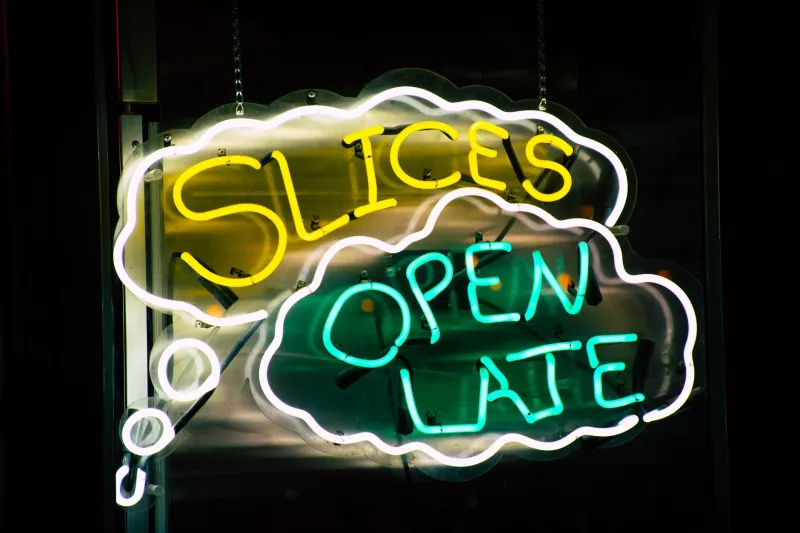
It's 2:47 a.m. in a city you don't entirely know. The bar closed an hour ago, you're not ready to call it a night, and you're hungry in that particular way that only happens after midnight. In a city with real late-night bones, you'd have options. A diner with fluorescent lighting and a laminated menu. A taco truck parked at a predictable corner. Maybe a 24-hour pharmacy with a surprisingly good hot food counter. You'd find yourself at a table next to a nurse coming off a double shift, a couple of musicians packing up from a gig, and a guy who just seems to live there and probably has for years.
That scene is getting harder and harder to find. And its disappearance says something important — not just about nightlife, but about what kind of places American cities are becoming.
The Slow Fade of the Night Economy
The numbers aren't pretty. Over the past decade, the number of 24-hour diners operating in major American cities has declined significantly, with urban real estate pressure and shifting labor economics making round-the-clock operations increasingly difficult to sustain. All-night laundromats — once a fixture of working-class urban neighborhoods — have been squeezed out by rising rents in gentrifying areas and replaced by app-based laundry pickup services that, while convenient, don't exactly foster the kind of accidental community that a shared spin cycle does at 3 a.m.
Late-night movie theaters are nearly extinct in most markets outside of major metros. The midnight movie, once a cultural institution that introduced generations of Americans to cult cinema, has largely migrated to streaming platforms. The experience is technically preserved. The community around it is gone.
This isn't purely a pandemic story, though COVID accelerated everything. The erosion started earlier, driven by a combination of commercial rent increases, noise ordinances tightening in newly residential neighborhoods, changing drinking habits among younger adults, and the general domestication of urban nightlife — the idea that you can have anything delivered to your apartment, so why go out at all?
What Actually Happens After Midnight
Here's what gets lost in the economic analysis: the argument for late-night spaces isn't really about convenience. It's about what those spaces make possible socially.
The classic 24-hour diner is a great example. It's one of the few remaining genuinely democratic public spaces in American cities. At 3 a.m., the social sorting that governs most of urban life breaks down. The after-theater crowd ends up in the same booth section as the overnight construction workers. The college students are two tables from the hospital staff. Nobody planned this. Nobody curated it. It just happens because everyone needs coffee and eggs and somewhere to sit that isn't their own apartment.
That kind of accidental mixing is genuinely rare in contemporary urban life, where most of our social spaces — from fitness studios to cocktail bars — are increasingly calibrated toward specific demographics. Late-night spaces, by their nature, couldn't afford to be that selective. They took whoever showed up.
For travelers, this made them invaluable. The 24-hour diner at the end of a long night out was often where you actually learned something about a city. Not the curated version from the tourism board, but the real version — the one where the server had opinions about local politics and the guy at the counter knew which neighborhoods were actually changing and why.
The Cities Still Holding On
Not everywhere is losing this fight at the same rate. A handful of American cities still have functioning late-night ecosystems worth seeking out.
New Orleans is the most obvious example — the city's unique relationship with time (and its explicit resistance to last-call culture) has preserved a late-night scene that would be unrecognizable to most other American cities. The 24-hour diner isn't an anomaly there; it's an expectation.
Chicago still has pockets of genuine late-night life, particularly in neighborhoods like Pilsen and Logan Square, where a combination of working-class history and artist community has kept certain all-hours spots alive. The Maxwell Street tradition of late-night Mexican food has proved surprisingly durable.
Las Vegas is the obvious outlier — it's essentially been engineered for 24-hour operation — but the more interesting story there is the off-Strip late-night scene, where locals eat and gather in spots that have nothing to do with the tourist economy.
And then there are the sleeper picks: El Paso, Texas has a late-night food culture rooted in its proximity to Ciudad Juárez that most visitors never discover. Detroit, in the middle of its ongoing reinvention, still has a handful of all-hours spots that serve as genuine community anchors in ways that feel increasingly rare.
How to Find What's Left
For travelers who want to experience authentic late-night city culture before it's completely gone, the search requires a different approach than standard restaurant hunting.
Forget the apps, at least as your starting point. The best remaining late-night spots tend to have weak digital presences precisely because they've been operating long enough to predate the review economy. Ask your hotel's overnight front desk staff — not the concierge, but the person working the 2 a.m. shift. They know. Ask the bartender at last call where they're going when they get off. Ask the cab driver.
Look for the functional, not the aesthetic. The late-night spots that have survived are rarely the ones that look good in photos. They're the ones that are genuinely useful to people who work nights — nurses, bartenders, musicians, overnight freight workers. If the menu is laminated and the lighting is unflattering and the coffee comes in a mug that's been refilled a thousand times, you're probably in the right place.
Pay attention to neighborhoods near hospitals, transit hubs, and entertainment districts. These are the areas where late-night demand has historically been strong enough to sustain all-hours businesses, and where some of that infrastructure still exists.
Why It's Worth the Effort
There's a version of city travel that's entirely comfortable — the curated restaurant reservation, the hotel bar, the early bedtime. Nothing wrong with any of that. But if you want to understand a city as it actually functions, as a living system rather than a collection of attractions, you need to see it at its least performative. And cities are least performative after midnight.
The late-night diner, the all-hours laundromat, the 24-hour pharmacy with the surprisingly decent hot counter — these places exist outside the attention economy. Nobody's posting their aesthetic shots of fluorescent diner lighting (well, almost nobody). The people there are there because they need to be, not because it's a scene. And that authenticity, increasingly rare in the Instagram-optimized version of urban experience, is exactly what makes these places worth finding before they're gone for good.