Invisible Playbook: How to Read a City's Unspoken Social Rules Before You Break One
There's a particular kind of tourist cringe that locals can spot from half a block away. It's not the camera — plenty of locals take photos. It's not even the map. It's the way someone stands in the middle of a busy sidewalk, pauses at the top of a subway escalator, or plants themselves at the only table in a coffee shop that's clearly been reserved by social contract for the regulars. Every city has a playbook. Nobody hands it to you. And yet, if you pay attention, you can learn to read it.
This isn't about performing authenticity or pretending you're not a visitor. It's about moving through a place with enough awareness that you're adding to the energy of a neighborhood rather than disrupting it. That's a subtle but meaningful difference — and it's what separates genuinely good travelers from people who just have a lot of passport stamps.
Transit Is a Social Contract, Not Just a Commute
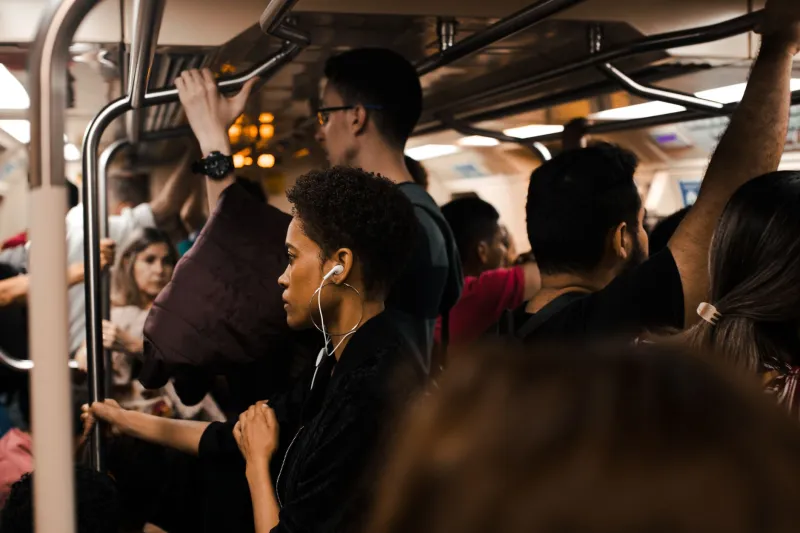
Hop on any city subway or bus and you're stepping into one of the most densely coded social environments in urban life. The rules are unwritten but aggressively enforced through body language, eye contact (or the deliberate absence of it), and strategic seat selection.
In New York, standing near the doors on a packed car when you're not getting off soon is a quiet act of aggression. In Chicago, the front seats on a bus are understood to be for elderly riders and people with mobility needs — even if no sign says so explicitly. In Washington D.C., the unspoken Metro rule is silence, full stop. No speakerphone, no loud conversations, and definitely no eating. Violate that last one and you'll feel the collective disapproval of an entire car without a single word being spoken.
The fastest way to read transit culture is to watch before you act. Don't rush to grab a seat. See where people stand, how much space they give each other, whether eye contact is normal or avoided. Give it two stops before you settle into your own pattern.
Coffee Shops Have Personalities — Learn to Match Yours to Theirs
Not all coffee shops are created equal, and the difference has nothing to do with the menu. Some are clearly built for lingering — the outlets are plentiful, the music is low, and the staff doesn't hover. Others are optimized for throughput, with minimal seating, loud music, and a vibe that politely communicates: get your latte and keep it moving.
Misreading this distinction is one of the most common ways visitors accidentally create friction. Spreading a laptop and three bags across a two-top in a spot that's clearly serving a morning rush crowd is the kind of thing that makes a barista's eye twitch. Meanwhile, ordering quickly and stepping aside in a slow-paced neighborhood café where people are deep in conversation and notebooks can feel equally out of place.
The tell is usually in the furniture. Bar stools and high counters say transactional. Mismatched armchairs and community tables say stay a while. Watch what the regulars are doing within the first two minutes of walking in, and mirror the pace of the room.
Block-by-Block Welcomeness Is a Real Thing
Urban neighborhoods shift in feel at a granular level that no city map captures. One block can feel open and inviting — storefronts with propped-open doors, neighbors chatting on stoops, eye contact that's warm rather than wary. The next block over might carry a completely different energy, one that communicates, clearly and without hostility, that this is not a space designed for casual foot traffic.
Respecting that gradient isn't just about safety. It's about reading the social architecture of a place honestly. Residential blocks in tight-knit neighborhoods — particularly in communities that have historically faced displacement or outside pressure — sometimes carry a quiet guardedness that's entirely reasonable given context. A traveler who blunders through without reading those signals isn't just being oblivious. They're being disrespectful, even if unintentionally.
The practical skill here is learning to distinguish between a space that's actively unwelcoming versus one that just needs a warmer approach. Slowing your pace, making brief and genuine eye contact, and not immediately pulling out a camera are simple moves that signal you're a person, not a content opportunity.
Regulars Have Territories — Don't Sit in Someone's Seat
This sounds almost comically old-fashioned, but it's real in every city. Neighborhood bars, diners, park benches, community chess tables — these spaces have informal ownership structures that locals understand implicitly. The corner stool at a dive bar in New Orleans. The specific bench outside a Chicago deli where the same three guys have been sitting every Tuesday for fifteen years. The end table at a Brooklyn café where a novelist has been working on the same manuscript since 2019.
You won't always know. But if you walk into a space and someone looks at you with an expression that's somewhere between confused and slightly offended, there's a decent chance you've landed in someone's spot. The move is simple: be pleasant, be flexible, and don't dig in defensively. A quick 'is this seat taken?' directed at the room goes a long way in almost any American city.
Pace Yourself to the Neighborhood's Rhythm
Cities move at different speeds, and so do their neighborhoods. Midtown Manhattan at 8 a.m. operates at a metabolic rate that would feel genuinely rude in a small Southern city on a Sunday morning. The reverse is equally true — arriving in a low-key Savannah neighborhood and trying to move at New York pace will read as anxious and a little aggressive.
The traveler's instinct is often to maintain their home city's rhythm regardless of where they land. Resist that. Spend the first hour of any new neighborhood visit just observing. How fast are people walking? Are conversations happening on the street, or is everyone heads-down? Is the default energy warm and chatty or cool and efficient? Matching that tempo — even imperfectly — is one of the most powerful things you can do to stop feeling like an outsider.
The Bigger Picture
None of this requires you to be someone you're not. You're still a visitor. That's fine — visitors are part of what makes cities dynamic. But there's a version of visiting that's genuinely curious and respectful of the social ecosystems you're moving through, and there's a version that treats a city like a theme park built for your entertainment.
The first version makes you a better traveler. It also, not coincidentally, tends to lead to better experiences — the kind where a local ends up recommending a restaurant that isn't on any list, or where a neighborhood that looked unremarkable on a map turns out to be the most interesting place you visited all trip.
Read the room. Every room. That's the whole playbook.