Pretty from a Distance: The Truth About America's Most Overhyped Tourist Landmarks
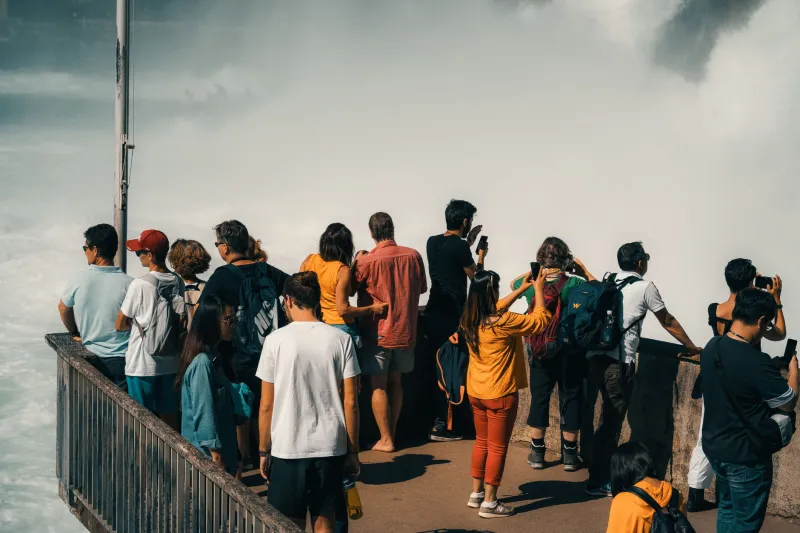
You've seen the photo a thousand times. Maybe it was on someone's Instagram, maybe it showed up in a travel roundup, maybe it was the wallpaper on your phone for three months while you planned your trip. And then you show up. You wait in line. You find the exact angle. You take the shot.
And you feel... nothing.
It's one of modern travel's quietest disappointments — the landmark that looks incredible in every photo and lands with a dull thud in real life. Don't worry, it happens to the best of us. But it doesn't have to keep happening.
The Camera Lies (Beautifully)
Here's the uncomfortable truth nobody puts in the travel brochure: photography is a compression machine. It flattens crowds, removes noise, strips away the hot-dog cart smell, and turns a chaotic urban plaza into something that looks like a movie still. The lens doesn't show you the construction scaffolding on the left side of the frame. It doesn't capture the guy in a novelty costume aggressively asking for tips. It absolutely cannot convey the sensation of being shoulder-to-shoulder with 400 other people all trying to get that same shot.
Social media has accelerated this gap dramatically. When a location goes viral, it attracts not just tourists but a whole infrastructure of tourism — vendors, tour buses, entrance fees, velvet ropes — that fundamentally changes what the place feels like. The version of a landmark that went viral often no longer exists by the time most people arrive to experience it.
The Hype Trap: What Actually Goes Wrong
Not every overhyped spot fails for the same reason, but a few patterns come up again and again.
Scale mismatch is probably the most common. Certain famous landmarks are physically smaller than most visitors expect. When you've seen something blown up on a billboard or filling a phone screen, your brain quietly inflates its dimensions. Arriving to find something that's, well, kind of compact can feel genuinely disorienting.
Context collapse is another big one. A gorgeous architectural detail looks extraordinary in isolation. But surrounded by souvenir shops, tour group staging areas, and roped-off viewing zones, that same detail gets swallowed by noise. The magic was always partly about context — and the context has been replaced.
The performance of experience has also become a real issue. At heavily trafficked landmarks, a significant portion of the crowd isn't there to experience the place — they're there to document that they experienced it. That energy is contagious and a little hollow. It's hard to feel genuinely moved by something when everyone around you is treating it as a prop.
Cities Where the Gap Is Widest
This isn't about calling out specific landmarks by name — that's not really the point. But there are certain cities where the expectation-versus-reality gap tends to run especially deep, usually because they've been marketed so aggressively for so long.
Major coastal destinations — think certain neighborhoods in New York, Los Angeles, and Miami — have flagship photo spots that have been so thoroughly absorbed into pop culture that visiting them feels less like discovery and more like checking a box. The spot exists primarily as a reference point now, not as an experience.
Theme-park-adjacent cities in Florida and Southern California have a related problem: the entire surrounding culture is built around manufactured wonder, which creates an expectation baseline that real-world landmarks can rarely match.
Midwestern cities, interestingly, often run in the opposite direction. Because expectations tend to be lower going in, the actual experience frequently surprises. A great museum in Cleveland or a stunning architectural district in Detroit can genuinely knock you sideways because you weren't braced for it.
How to Spot the Real Thing Before You Go
Savvy travelers have developed a few reliable filters for separating viral backdrops from genuine experiences worth your time.
Look at what locals are actually doing there. If a landmark's social media presence is dominated by tourists and the comment sections are full of visitors asking each other for tips, that's a signal. If locals are actually using the space — eating lunch there, meeting friends, bringing their kids — that's a much better sign.
Seek out reviews that mention disappointment. Most travel review platforms let you sort by lowest rating. Reading the critical reviews of a famous landmark isn't about being negative — it's about calibrating your expectations and understanding what the experience is actually like on a random Tuesday in August.
Ask the concierge what tourists always skip. Hotel concierges and local tourism staff have watched thousands of visitors cycle through. They know which famous spots reliably underwhelm and which under-the-radar alternatives quietly deliver. Most of them will tell you if you actually ask.
Check the surrounding neighborhood, not just the landmark. The best attractions tend to exist in a context that rewards wandering. If the famous spot is essentially a standalone set piece with nothing interesting within a half-mile radius, that's worth knowing ahead of time.
Reframing What "Worth It" Actually Means
Here's the part that might be a little uncomfortable: sometimes the overhyped landmark is worth visiting anyway — just not for the reasons you thought.
Standing in front of something famous and feeling the gap between image and reality can itself be a genuinely interesting travel experience. It tells you something real about how media shapes expectation, about the economics of tourism, about what we collectively decide to treat as meaningful. That's not nothing.
The problem isn't really the landmark. The problem is traveling with a fixed script — arriving with a specific emotional outcome already written and then feeling cheated when the place doesn't perform it on cue. The landmarks that truly deliver tend to be the ones you approached with some flexibility, some openness to being surprised in a direction you didn't expect.
The Better Question to Ask
Instead of "Is this landmark worth visiting?", try asking "What kind of experience am I actually looking for?" If the answer is a great photo and a cultural reference point you can share, then the famous spot might be exactly right. If the answer is genuine discovery, surprise, or the feeling of being somewhere that hasn't been completely processed for tourist consumption — you probably need to go a little further off the beaten path.
The best cities in America are full of both. The trick is knowing which one you're walking into.