Where Grandma Used to Shop: How Family Landmarks Help You Read a Neighborhood's Soul
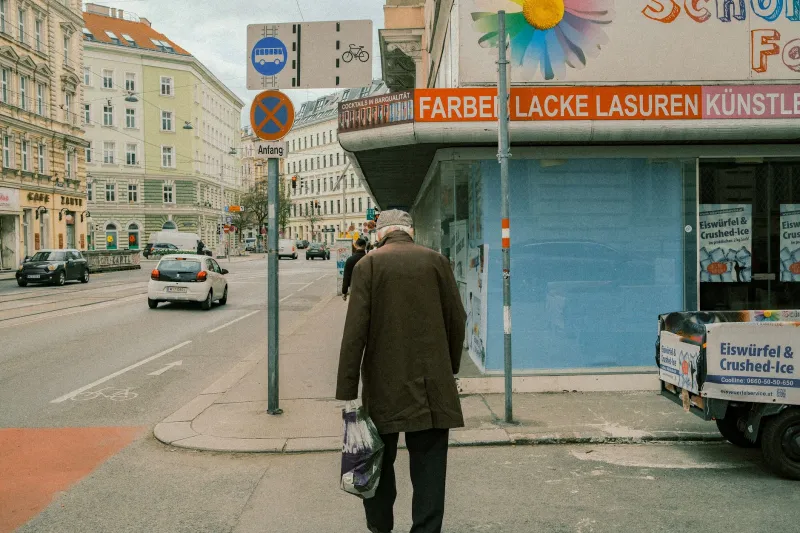
There's a particular kind of tour you'll never find on Airbnb Experiences. It happens in a parked car, or on a slow walk to nowhere specific, when a longtime resident points at a gleaming juice bar and says, quietly, "My grandmother used to cash her checks right there." No bitterness, necessarily. Just information. The kind that takes decades to accumulate and about thirty seconds to deliver.
For travelers trying to understand a city beyond its curated surface, these offhand family references are pure gold. They're a compass. And once you learn to listen for them — or better yet, ask for them — you start seeing neighborhoods in a completely different way.
The Invisible Map Every Local Carries
Every person who grew up in a city neighborhood is walking around with a double-exposed photograph in their head. There's the block as it looks today, and there's the block as it existed in memory — layered with the hardware store that's now a wine bar, the vacant lot that's now a dog park, the corner diner that's now a co-working space with exposed ductwork.
Urban planners call this kind of memory-based spatial orientation "cognitive mapping." Locals just call it knowing where you are.
What makes these mental maps so useful for outsiders is that they encode value judgments that no Yelp review ever captures. When someone tells you their dad used to get his shoes resoled in the building that's now a boutique candle shop, they're not just sharing trivia. They're telling you something about what the neighborhood used to provide, who it served, and whether the current version is an upgrade or a substitution.
The Grandma Test, Explained
Here's a simple framework worth borrowing: ask yourself — or better yet, ask a local — whether the grandmother who once anchored this block could still function here.
Could she afford to shop? Could she find the foods she cooked with? Would she recognize anyone on the street? Is there a bench to sit on, a pharmacy within walking distance, a place to pay a bill in cash?
This isn't about resisting change or romanticizing the past. Some old neighborhoods were genuinely underserved, and real investment has made real differences in people's lives. The Grandma Test isn't anti-development — it's a diagnostic tool. It separates neighborhoods where improvement has been additive (new things arrived without erasing the old ecosystem) from neighborhoods where change has been substitutional (the existing community was quietly replaced along with its infrastructure).
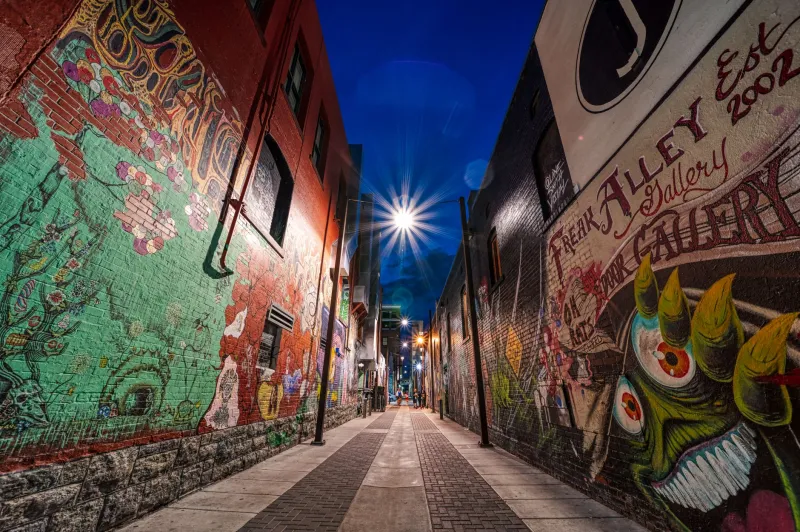
In cities like Chicago's Pilsen, longtime Mexican-American families have watched murals get preserved while the grocery stores they actually used have disappeared. The aesthetic of the community got curated and kept; the community itself got priced out. The murals pass the visual authenticity check. The neighborhood fails the Grandma Test.
What Personal Landmarks Actually Reveal
When you're visiting a city and trying to get a real read on a neighborhood, pay attention to what locals reference as anchors. A few categories worth noticing:
The Corner Store That Isn't There Anymore In dense urban neighborhoods, the corner bodega, tienda, or corner market wasn't just a convenience — it was infrastructure. Credit extended to regulars. Specific products stocked for specific communities. When that store becomes a boutique or a smoothie spot, it signals that the neighborhood's economic metabolism has shifted in ways that don't show up on any city planning document.
The Old Office Building Nobody Talks About In many cities, mid-century commercial buildings that once housed accountants, small law firms, and union halls have been converted into loft apartments or creative offices. That's not inherently bad. But when a local says "my dad worked in that building for thirty years," they're pointing at a node of middle-class employment that used to exist in the neighborhood — and no longer does.
The Playground That Changed Playgrounds are surprisingly reliable neighborhood barometers. An old blacktop with metal equipment that's been replaced by a rubberized surface with custom climbing structures might signal genuine community investment — or it might signal that the families using that playground have been replaced by families with more political pull and more money. Who lobbied for the renovation? Whose kids use it now? These questions matter.
The Church, Mosque, or Temple That's Still There Religious institutions are often the last community anchors to survive gentrification, partly because they own their buildings outright. If a neighborhood's ethnic character seems to have evaporated but a Vietnamese Catholic church or a Black Baptist congregation is still holding services on Sunday morning, that's a real signal. The community may have been displaced from daily commercial life but hasn't fully let go of its spiritual geography.
How to Actually Use This as a Traveler
You don't need to be a sociologist to put this into practice. A few simple moves:
Talk to people who've been there a while. Not the new coffee shop owner who moved from Portland two years ago. The woman running the alterations shop. The guy behind the counter at the place that looks like it hasn't updated its signage since 1987. Ask them what used to be here. Ask them what they miss.
Look for layering. Neighborhoods with genuine character tend to have multiple eras visible at once — a 1950s pharmacy sign above a new restaurant, a family-owned hardware store next to a cocktail bar. Monocultures of newness are a warning sign.
Notice who's missing. If every face you see in a neighborhood looks like a variation on the same demographic, ask yourself what replaced the diversity that most urban neighborhoods naturally develop over time. Homogeneity in a city neighborhood is almost always the result of something being pushed out.
Trust the food. This one's been said before, but it holds up. When a neighborhood's authentic culinary traditions survive — not as museum pieces but as actual working restaurants serving actual community members — that's a strong sign the community itself has survived.
Why This Matters for Travelers, Not Just Locals
Here's the thing about manufactured authenticity: it's expensive to create and exhausting to maintain, and it tends to look the same in every city. The same reclaimed wood. The same hand-lettered menus. The same "locally sourced" language applied to neighborhoods that displaced every local institution to make room for the aesthetic.
Travelers who can read past the surface — who know how to find the places that pass the Grandma Test — end up with something genuinely rare: a city experience that couldn't have happened anywhere else. The specific weight of a neighborhood's history shows up in its food, its architecture, its street life, and yes, in what the locals point at when they're trying to explain where they came from.
The best city travel isn't about hitting the highlights. It's about learning to read the palimpsest — all those layers of life written and rewritten on the same few city blocks. Family landmarks are the key to that reading. They're the annotations in the margins, placed there by people who loved a place long before it showed up on any travel list.
Listen for them. They'll tell you everything.